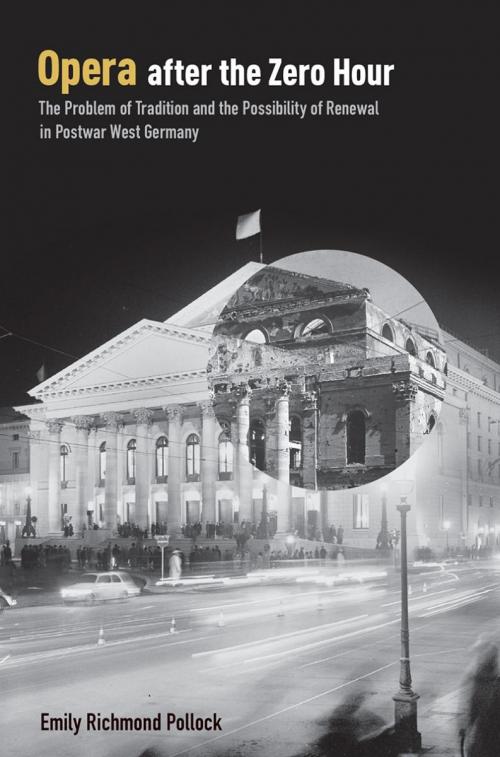
Emily Richmond Pollock’s book, Opera after the Zero Hour: The Problem of Tradition and the Possibility of Renewal in Postwar West Germany has been published by Oxford University Press. 

The book presents opera as a site for the renegotiation of tradition in a politically fraught era of rebuilding. Though the Zero Hour put a rhetorical caesura between National Socialism and postwar West Germany, the postwar era was characterized by significant cultural continuity with the past. With nearly all of the major opera houses destroyed and a complex relationship to the competing ethics of modernism and restoration, opera was a richly contested art form, and the genre’s reputed conservatism was remarkably multi-faceted. 

Pollock explores how composers developed different strategies to make new opera “new” while still deferring to historical conventions, all of which carried cultural resonances of their own. Read more here.
Ken Urban Wins 2024 Blue Ink Award

As part of the award, Urban receives a $3,000 cash prize, a staged reading directed by Artistic Affiliate Dexter Bullard at American Blues Theater, and the opportunity to further develop his script with our artists.

Composing for 37 Years at MIT

In the intimate but acoustically reassuring Killian Hall, with the cooperation of Collage New Music, the Institute’s Music Department hosted an evening of Peter Child’s recent works.

MTA Associate Professor Emily Richmond Pollock Named 2024 MacVicar Fellow

Role models both in and out of the classroom, Berggren, Campbell, Pollock, and Vaikuntanathan join an elite academy of scholars from across the Institute who are committed to curricular innovation; exceptional teaching; collaboration with colleagues; and supporting students through mentorship, leadership, and advising.

Play It Again, Spirio

A piano that captures the data of live performance offers the MIT community new possibilities for studying and experimenting with music